


1. What is 1-component PU glue?
One-Component Polyurethane Adhesive, 1K PU is an adhesive with a polyurethane chemical base, supplied in the form of a pre-mixed adhesive system. Users do not need to mix the curing agent and glue separately in the same ratio as conventional two-component PU systems.
In the group of PU adhesives that react with moisture, the curing process takes place when the active isocyanate groups come into contact with moisture in the air or moisture present on the material. The reaction creates a linked polymer network, causing the glue layer to gradually change from a liquid state to a solid state capable of adhesion.
However, not all single-component PU products have the same mechanism of action. In addition to moisture curing systems, the market also has reactive hot melt PU adhesive technologies or heat curing systems. Therefore, it is necessary to base on the technical documents of each product to choose the appropriate method of use.
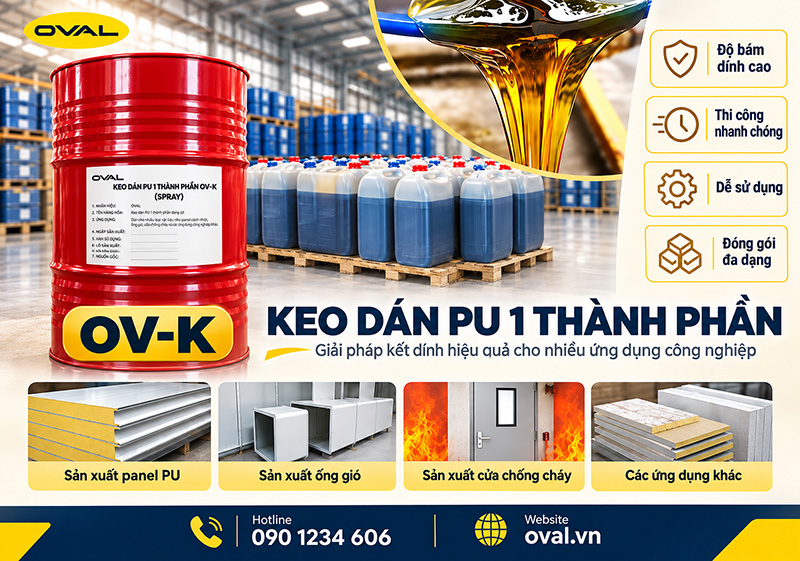
In the field of construction materials, Oval Vietnam's OV-K fireproof PU adhesive is a one-component adhesive line developed for applications in bonding steel door cores, fire doors and industrial panels.
2. Composition and curing principle of one-component PU glue
2.1. Basic chemical composition
Reactive polyurethane adhesive systems are often built on a pre-polymer base containing an isocyanate group, combined with additives to adjust the viscosity, reaction speed, workability and properties of the cured adhesive layer.
Depending on usage requirements, the formula can add catalysts, fillers or additives to improve heat resistance. Specialized adhesive systems for fireproof materials may use additional ingredients to support thermal properties and reaction to fire.
The specific ratio and chemical nature of each type of glue often depends on its own production formula. Therefore, it should not be assumed that all 1-component PU adhesives have the same features or safety level.
2.2. Moisture curing mechanism
With moisture curing 1-component PU adhesive, the bond formation process can be understood in three stages:
- Apply glue to the material: Adhesive is applied, rolled or sprayed onto the surface. At this stage, viscosity and spreading ability determine the level of glue distribution in the contact area.
- Reaction to humidity: Isocyanate groups react with water, forming intermediate functional groups and releasing CO₂ gas. The reaction process continues to form urea bonds, contributing to the development of the polymer network.
- Forming the link layer: As the reaction progresses, the viscosity increases, the adhesive layer gradually solidifies and creates a bond between the joined surfaces.
Curing speed depends on glue formula, temperature, humidity, glue layer thickness and material properties. Metal surfaces do not provide nearly as much moisture as porous materials, so environmental conditions and the pressing process are especially important.
One point to note is that too much moisture can cause a strong gas reaction, creating air bubbles or defects in the glue line. Therefore, humidity needs to be controlled appropriately instead of wetting the material arbitrarily.
3. Outstanding characteristics of 1-component PU glue
3.1. Ability to adhere to many materials
The notable advantage of PU glue is its ability to bond many different groups of materials, from metal and wood to insulation materials and some types of composites. Thanks to that, the glue is suitable for products with multi-layer structures or combinations of materials with different physical and mechanical properties.
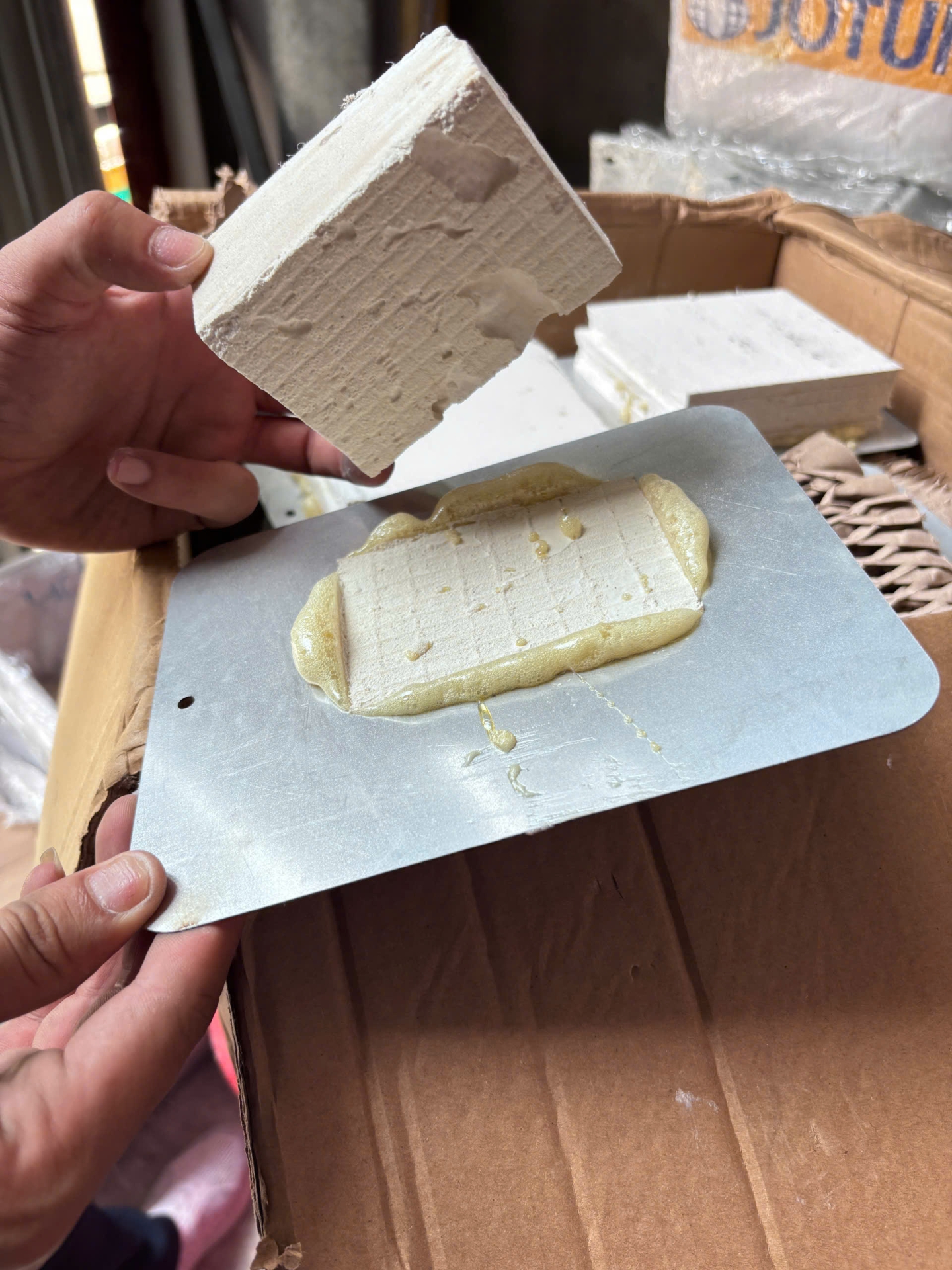
However, the adhesion effect is not uniform on all surfaces. Steel preservatives, dust, paint or materials with low surface energy can all reduce bonding ability. Testing on actual materials is still necessary before mass production.
3.2. Mechanical strength and resistance to deformation
Polyurethane can be designed to create a bond layer that is both mechanically durable and capable of absorbing some of the stress caused by vibration or expansion differences between materials.
This is useful for steel doors and laminated panels, where the outer metal layer and core material can vary in size as the ambient temperature fluctuates.
3.3. Moisture resistance after curing
Many PU adhesive systems have good moisture resistance when properly cured. The bonding layer can help limit water or moisture penetration at the grafting area.
It is necessary to distinguish the moisture resistance of cured glue from the moisture sensitivity of unused glue. During storage, steam can cause the glue to react prematurely, increase viscosity or clot.
3.4. Convenience in the production process
Not having to mix two components helps reduce preparation operations and limits mixing ratio errors. This feature is convenient for factories using hand sweeping, glue rolling or spraying with specialized equipment.
However, one-component glue still needs to control operating time, pressing temperature and storage conditions. Convenience of use does not mean that technological requirements can be ignored.
3.5. Heat resistance depends on formulation
Some industrial PU adhesives are designed to accommodate heating cycles in production. This is an important characteristic when bonding materials that must undergo drying or surface finishing.
However, short-term heat resistance does not mean the ability to work continuously at that temperature. In particular, the concepts of heat-resistant glue and glue used in fireproof structures need to be evaluated separately.
4. Technical specifications of Oval Vietnam's OV-K 1-component PU adhesive
OV-K PU glue is a product developed and manufactured by Oval Vietnam Industry Joint Stock Company in Vietnam, applied in connecting steel doors, fireproof doors and various types of panels.
Technical information of 1-component PU glue product has the following main characteristics:
| Product specifications | Value |
|---|---|
| Product code | OV-K |
| Glue type | One-component polyurethane adhesive |
| Color | Brown color |
| Viscosity at 25°C | 1,100 ± 300 cps |
| Gel formation time at 25°C | 10 ± 2 minutes |
| Free hatching time at 25°C | 15 ± 2 minutes |
| Complete dry time | 250 ± 40 minutes at 25°C |
| Tensile strength | ≥ 3,000 N |
| Heat resistance test | 250 ± 3°C for 20 minutes: Good |
| Cold tolerance test | -40 ± 2°C for 24 hours: Good |
| Specifications | Can 20 kg / Drum 200 kg |
| Preservation | 20–25°C, covered, limited moisture |
| Expiry date in original drums | 04 months under the above storage conditions |
Reference source: Product information of PU adhesive OV-K – Oval Vietnam. Values may vary according to actual temperature, humidity and processing conditions.
The above parameters provide the basis for evaluating the applicability of the product. For example, viscosity affects the adhesive coating method; Gel formation time is related to the operating range; Pressing time and complete drying time are two concepts that need to be distinguished.
For the tensile strength index, the force value in N only has a full assessment meaning when the test method, sample size and testing conditions are known. Similarly, short-term heat tolerance results should not be interpreted as continuous heat tolerance.
5. Application of 1-component PU glue in industry
One-component polyurethane adhesives are used in many fields, but each formulation is optimized for different purposes. For the OV-K adhesive line, the key applications are focused on the production of doors and panel materials.
5.1. Production of fireproof steel doors
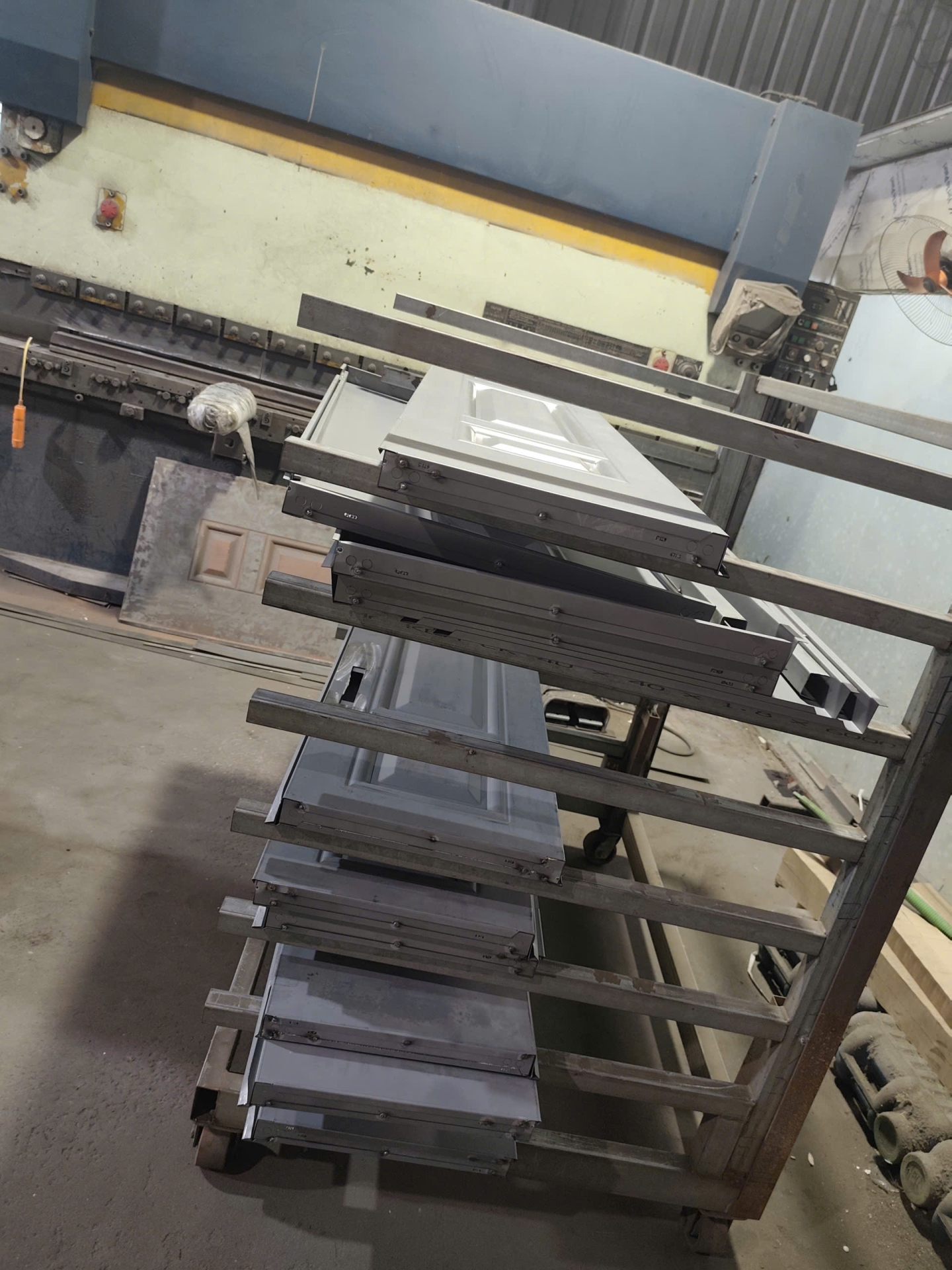
In the structure of a fireproof steel door, the glue layer is responsible for the connection between the steel shell and the core material. Common core materials include MgO board, mineral wool, gypsum board or other engineering materials according to the manufacturer's design.
Appropriate PU adhesive can help maintain the bond between layers, limiting layer separation during transportation, installation and use. The ability to distribute glue evenly also contributes to improving the quality of door processing.
However, The fire resistance of fire doors must be evaluated on the structure or door set according to the applicable test method. The use of a fire-resistant glue alone is not enough to conclude that the door meets fire resistance level EI60, EI90 or other levels.
5.2. Production of wood grain steel doors and safety steel doors
For wood grain steel doors, the door structure usually must meet the requirements for shape stability, bond strength and finished surface quality.
PU glue is used to join layers of materials during the wing creation process. When choosing the right glue and pressing process, manufacturers can better control the risk of core layer peeling during processing.
If the product needs to go through the electrostatic painting drying process, evaluating the heat resistance of the glue line under real conditions is even more important.
5.3. Production of insulation panels and laminated panels
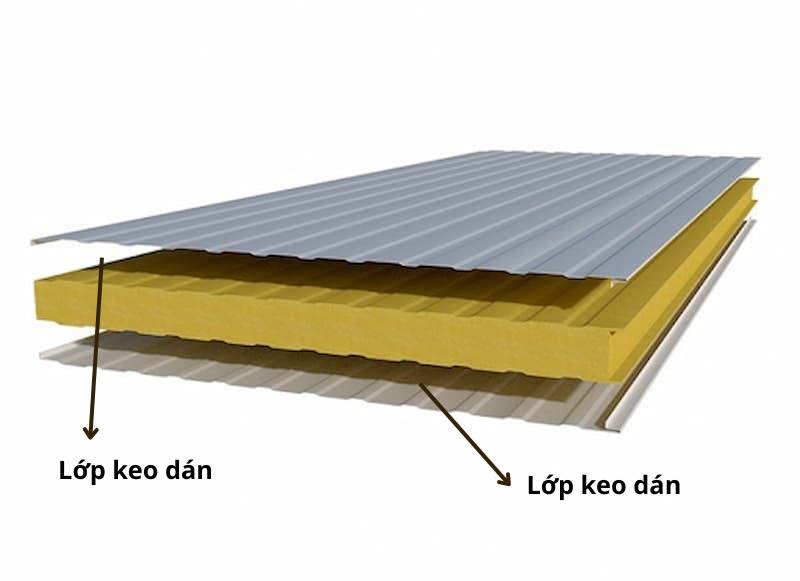
Industrial panels can be made from two layers of metal surface combined with core materials such as mineral wool, EPS, PU or other types of insulation materials.
In panel systems manufactured using the lamination method, PU glue helps create a bond between the surface layer and the core. The quality of the glue line affects the stability of the panels during transportation, processing and installation.
With continuous or semi-automatic production lines, the ability to control glue amount, coverage and pressing time are important factors in reducing error rates.
5.4. Joining MgO sheet and mineral wool material
Fireproof MgO sheet and mineral wool are materials used in structural systems that require heat insulation or fire resistance.
When joining these materials with steel or corrugated iron, the adhesive layer needs to meet adhesion requirements on both hard surfaces and materials with porous structures. In addition to adhesion, attention must be paid to glue permeability, glue consumption and core surface condition.
With this application, Oval Vietnam introduces the OV-K series for door and panel structures. The selection of a specific product should be based on sample testing and the intended material structure.
5.5. Other industrial applications
Considering the scope of polyurethane technology in general, one-component PU adhesive can also appear in furniture production, construction material joining, equipment assembly, transportation industry and some lamination applications.
However, this is the general application range of the PU glue group, which does not mean that all OV-K products are suitable for the above fields. For off-design use, compatibility and technical requirements should be confirmed with the supplier.
6. Compare 1-component PU glue and 2-component PU glue
The basic difference between the two colloidal systems lies in the preparation method and curing mechanism. Each system has certain advantages for the production process.
| Criteria | PU 1 component | 2-component PU |
|---|---|---|
| Prepare | No need to mix a separate hardener | It is necessary to mix the two components |
| Curing | Depending on the technology, usually by humidity or heat | Reaction between mixed ingredients |
| Usage control | Pay attention to humidity, operation time, and working temperature | Pay attention to mixing ratio and mixture life time |
| Equipment | Mix by hand or spray machine based on product line | A dosing and mixing system may be required |
| Application | Gluing, panel production, fireproof door production and many other fields | Bonding, molding, coating and specialized applications |
Each type of PU glue has its own characteristics, advantages/disadvantages. Customers need to clearly understand the type of glue to choose the one that suits their needs.
7. Instructions for using 1-component PU glue in production
To achieve stable adhesive quality, production facilities need to develop a process based on the technical instructions of the type of glue being used.
Step 1: Check the material surface
Remove dust, grease, impurities and coatings that are not firmly adhered to the location to be pasted. With steel, corrugated iron or surface-treated materials, compatibility between glue and coating should be checked before production.
Step 2: Check glue condition
Confirm product code, expiration date and storage conditions. Do not arbitrarily use glue that has appeared solidification, film formation or abnormal changes without evaluation by the technical department.
Step 3: Apply glue according to the appropriate level
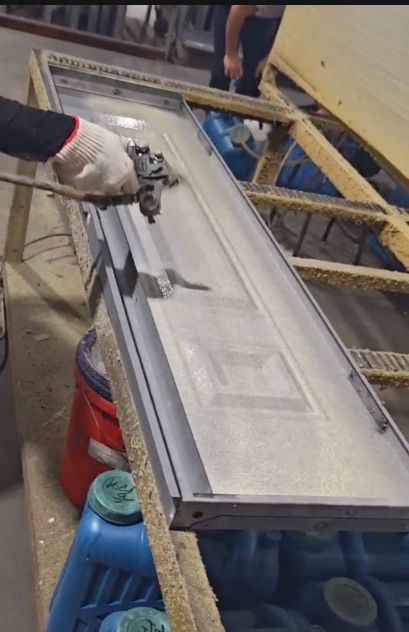
Depending on the type of product, the method of sweeping, scratching or spraying can be used. The adhesive layer needs to be distributed relatively evenly over the contact area. Do not increase the amount of glue yourself with the expectation that the bond will always be stronger, because too thick a layer of glue can cause defects or prolong curing time.
Step 4: Combine materials and press
Place the material layers in the correct position, ensure contact according to design and put them into the pressing system. Temperature, pressure and pressing time must comply with the specific adhesive code instructions.
Oval Vietnam announces OV-K glue options for both hot and cold pressing methods. Operators need to differentiate the pressing mode of each line, not using a common parameter for the entire product.
Step 5: Check after pressing
After completing the pressing process, it is necessary to check the status of layer separation, air bubbles, lack of glue and product stability. Before moving on to the next processing step, make sure the connection meets process requirements.
For mass production, adhesion testing and quality monitoring should be performed on representative samples to promptly adjust technological parameters.
8. Choose hot pressed or cold pressed PU glue from Oval Vietnam
Besides the popular OV-K line, Oval Vietnam introduces products suitable for different adhesive coating methods and pressing modes.
| Product code | Method | Declared working temperature | Pressing time |
|---|---|---|---|
| OVK-TC25 | Hand swept, cold pressed | 15–50°C | 90–120 minutes |
| OVK-TC75 | Hand swept, hot pressed | 70–90°C | 15–20 minutes |
| OVK-PH25 | Machine injection, cold pressing | 25–50°C | 90–120 minutes |
| OVK-PH75 | Machine injection, hot pressing | 70–90°C | 15–20 minutes |
For factories using manual equipment, hand-applied glue may be more suitable for operations. Meanwhile, machine spraying systems are often considered when needing to control coverage over large areas and uniformity between products.
The hot pressing method can shorten the time occupied by the pressing machine but needs to take into account energy costs and the heat resistance of the material. Cold pressing does not require the same heating cycle, but often requires a longer holding time.
9. Factors affecting adhesive quality
In actual production, bond quality depends not only on the glue itself but also on processing conditions.
- Ambient temperature: Temperature can affect viscosity, spreadability and reaction rate. When the weather is cold, special attention should be paid to storage conditions and pressing regime.
- Humidity: Humidity curing adhesive systems require appropriate reaction conditions. Too low humidity can cause slow curing, while too much water can cause gas formation and affect the glue line.
- Surface cleanliness: Dust, oil or weak coatings impede contact between the adhesive and the material, increasing the risk of delamination.
- Amount of glue used: Too little glue can cause lack of bonding, while using too much increases wastage and can create defects.
- Pressing mode: Uneven pressure, insufficient holding time or improper temperature can all reduce the quality of the finished product.
Therefore, businesses should develop separate standards and testing procedures for each product structure, instead of just relying on one criterion such as drying time or viscosity.
10. Notes on safety and preservation of PU glue
When using polyurethane adhesives in industrial environments, the manufacturer's safety instructions and chemical safety data sheets (SDS) should be followed.
Some PU systems contain unreacted isocyanate groups, which may cause respiratory and skin irritation or sensitization if exposure is not controlled. Therefore, the low or odorless properties should not be taken as evidence that the product is completely free of health risks.
Operators need to use protective equipment appropriate to the job, ensuring ventilation and controlling exposure, especially for the glue spraying process.
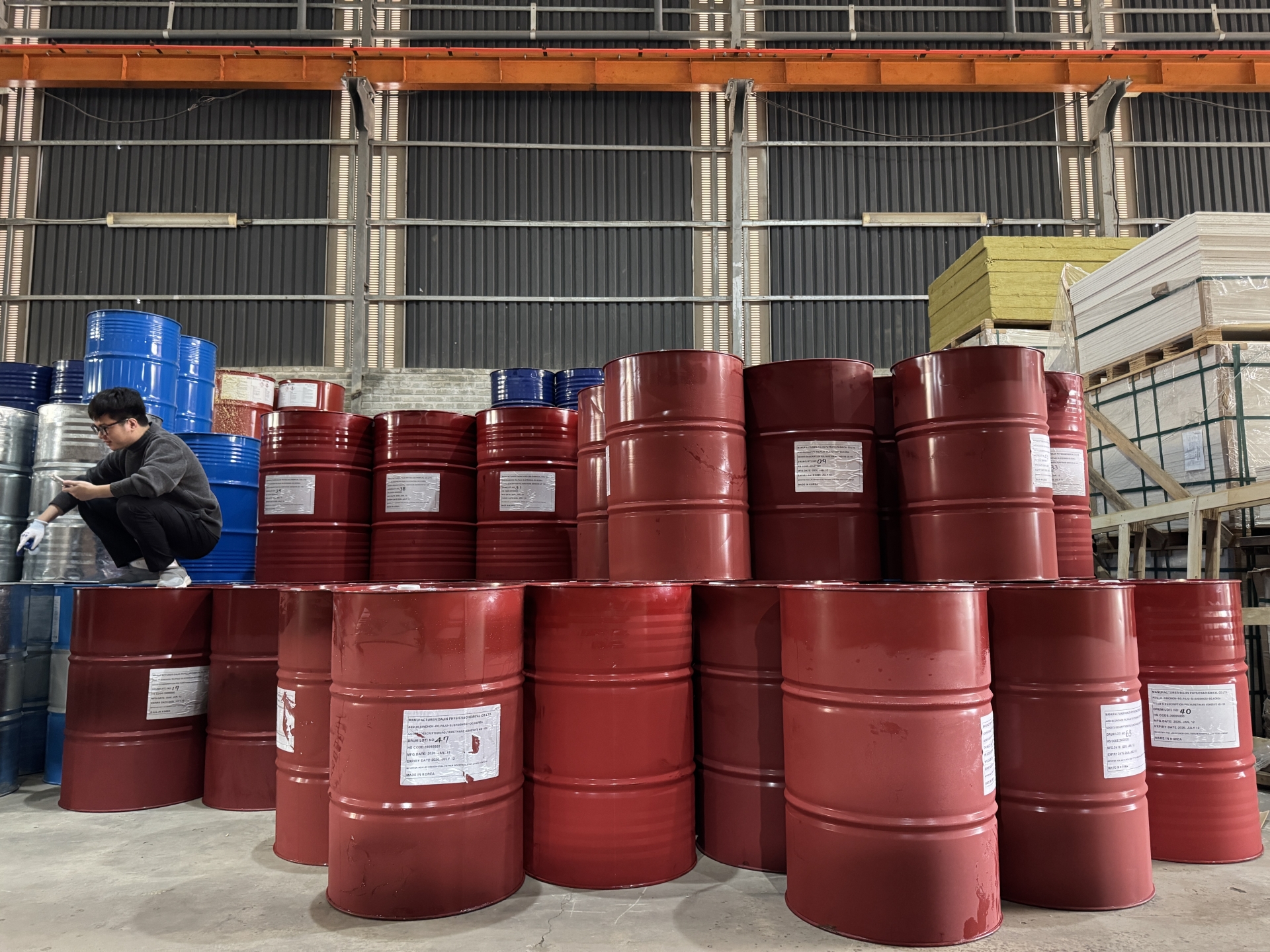
With the popular OV-K line, Oval Vietnam instructs to store it indoors with a roof, cover the container and maintain a temperature of about 20–25°C. After opening the drum, the product needs to be sealed and used within an appropriate time; The product page recommends use for about a month.
Do not heat directly on a location on the drum body or use undirected heating methods. When storage conditions do not meet requirements, consult the technical department before continuing to use.
Oval Vietnam – PU adhesive solution for industrial production
Oval Vietnam Industry Joint Stock Company provides PU adhesive lines for the production of steel doors, fireproof doors and industrial panels. The catalog includes options for hand sweeping, machine injection, hot pressing and cold pressing.
For businesses looking for adhesive solutions for laminated materials, choosing the right glue code right from the testing stage will help better control finished product quality, production process and usage costs.
To find out product specifications, packaging specifications or application methods, customers can refer to the catalog Oval Vietnam fireproof PU adhesive Or contact the consulting team directly.
Contact us to receive detailed PU glue consultation
OVAL VIETNAM INDUSTRIAL JOINT STOCK COMPANY
Hotline / Zalo: 090 1234 606
Email: contact@oval.vn
Website: www.oval.vn

Conclusion
1 component PU glue is an adhesive solution worth considering in industrial production thanks to its convenience in construction, ability to bond many materials and flexibility in process design. For the fireproof steel door and laminated panel industry, Oval Vietnam's OV-K PU adhesive provides options for different processing methods. However, the final bonding effect still depends on choosing the right product, controlling the surface, temperature, humidity and pressing mode. Enterprises should combine manufacturer parameters with actual test results to build appropriate processes, aiming for stable quality and long-term production efficiency.